
What Happens From the First Crack to a Smooth Finish
Understanding the concrete driveway repair process starts with knowing that most driveways can be fixed without full replacement. The process usually includes cleaning the surface, repairing cracks or holes, leveling uneven spots, and sealing the area to protect it. Each step builds on the one before it. When done right, repairs can extend the life of your driveway for many years.

What You Need Before Starting
Before you begin any concrete driveway repair, gather the right tools and materials. Planning ahead saves time and prevents uneven results. Small cracks need different products than deep holes or sunken slabs.
- Pressure washer or hose with strong spray
- Concrete crack filler or patch mix
- Trowel or putty knife
- Concrete bonding adhesive
- Level and straight board
- Protective gloves and safety glasses
- Concrete sealer
If your driveway has large damage, you may also need foam injection kits or forms for reshaping edges. Taking time to inspect the driveway first helps you buy the right materials.
Step-by-Step Repair Process
Most concrete driveway repair jobs follow a clear order. Skipping steps can lead to cracks coming back.
- Clean the area. Remove dirt, weeds, and loose concrete. Wash the surface and let it dry fully.
- Open up cracks. Use a chisel or grinder to slightly widen narrow cracks. This helps the filler bond better.
- Apply bonding adhesive. Brush or pour it into the crack or hole if the product calls for it.
- Fill the damaged area. Use crack filler for small gaps. Use patch mix for deeper holes. Press it in firmly.
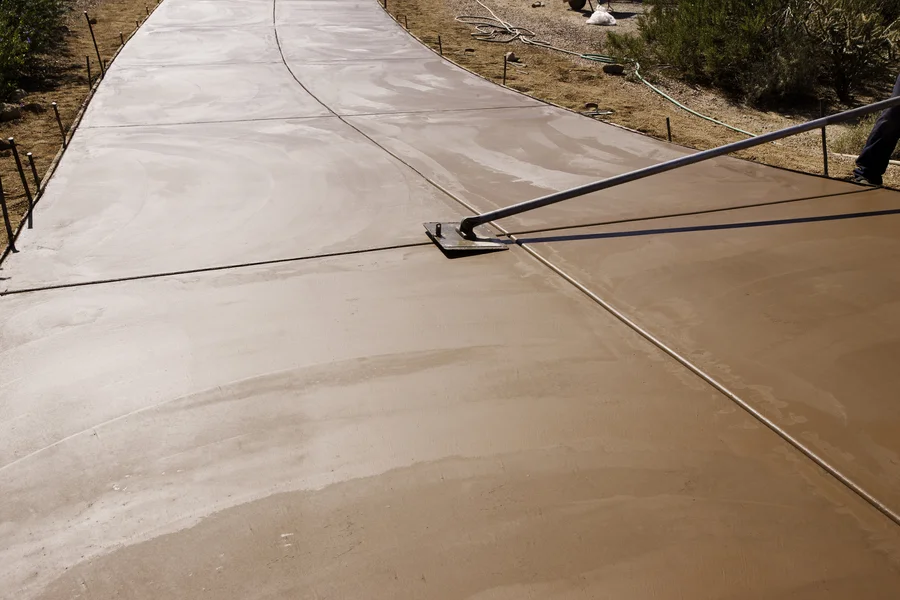
- Smooth the surface. Use a trowel to level the patch with the rest of the driveway.
- Let it cure. Follow drying times listed on the product label.
- Seal the driveway. Apply a sealer to protect the surface from water and stains.
For sunken slabs, the process may involve lifting the concrete using foam injection. This is more advanced and often handled by professionals.
Common Mistakes to Avoid
Many homeowners rush the repair process. That can cause patches to fail within a year.
- Skipping cleaning before applying filler
- Using the wrong product for large cracks
- Not allowing enough drying time
- Ignoring drainage problems
- Sealing before patches fully cure
Water is the biggest enemy of concrete. If you fix cracks but ignore pooling water, new damage will appear. Check nearby downspouts and grading to move water away from the driveway.
When to Call a Professional
Some driveway issues go beyond simple patching. If you notice wide cracks, deep sinking, or large sections breaking apart, professional concrete driveway repair may be the safer choice. Structural damage often means the soil below has shifted.
A trained crew can test the base layer, lift slabs evenly, and match the surface texture. This creates a smoother finish that blends with the rest of your driveway. It also helps avoid repeat repairs.
If more than one-third of the driveway is damaged, full replacement might be more cost-effective over time. A professional can inspect the surface and give honest guidance.
Final Recommendation and Next Steps
Concrete driveway repair works best when problems are fixed early. Small cracks are easier and cheaper to repair than large broken sections. Regular cleaning and sealing can slow wear and keep the surface strong. If you are unsure about the level of damage, it helps to get a second opinion. In Avon, IN, soil movement and weather changes can cause hidden issues under the slab. Our team at Thornton Brothers Concrete LLC handles repairs of all sizes, from minor cracks to major leveling projects. We use proven methods and durable materials. Call us at (317) 440-6046 to schedule an inspection and let us help restore your driveway the right way.